
A wedding film isn’t just about beautiful visuals—it’s about telling a story that feels personal, emotional, and timeless. As a wedding videographer, asking the right questions before the wedding day helps you understand the couple’s expectations, plan efficiently, and capture moments that truly matter.
Clear communication at this stage also ensures smoother collaboration later, especially when working with professional wedding video editing services to deliver a polished final film.
In this guide, we’ll cover the most important questions wedding videographers should ask couples before their big day to ensure a smooth shoot and a wedding film they’ll love forever.
Why Asking Questions Before the Wedding Is So Important
Every couple is different. Some want a cinematic love story, while others prefer a natural documentary-style film. By asking detailed questions in advance, you can:
- Avoid last-minute confusion
- Plan shots and audio properly
- Understand emotional priorities
- Deliver a wedding film aligned with the couple’s vision
Clear communication before the wedding leads to better storytelling and happier clients.
1. Understanding the Couple’s Vision & Style
Start by understanding how the couple imagines their wedding film.
Questions to ask:
- How would you describe your ideal wedding video?
- Do you prefer a cinematic, documentary, or storytelling style?
- Are there any wedding films you love or dislike?
- Do you want more candid moments or guided shots?
These answers help define your filming and editing approach from the start.
2. Learning Their Love Story & Important Relationships
A great wedding film reflects the couple’s journey and emotions.
Questions to ask:
- How did you meet?
- What moments are most important to you emotionally?
- Who are the key people we should focus on?
- Are there any sensitive family situations we should know about?
Knowing this allows you to capture meaningful reactions and genuine moments.
3. Wedding Day Timeline & Logistics
A clear timeline is essential for smooth coverage.
Questions to ask:
- Can you share the final wedding-day schedule?
- Where will both of you be getting ready?
- Are there multiple venues or travel gaps?
- Who will be the main coordinator or contact person?
This ensures you’re always in the right place at the right time.
4. Vows, Speeches & Audio Planning
Audio is just as important as visuals in a wedding film.
Questions to ask:
- Are you writing personal vows?
- Will speeches be given, and by whom?
- Will microphones and sound systems be available?
- Are there any special performances or rituals?
Planning audio early helps avoid missed or unclear recordings.
5. Music & Editing Preferences
Editing style plays a big role in how the final film feels. Music sets the emotional tone of a wedding film, so discussing wedding video songs with the couple in advance is essential.
Questions to ask:
- What mood do you want for your wedding film?
- Do you have any song preferences?
- Would you like short edits for social media?
- Do you prefer emotional, fun, or balanced pacing?
This helps you craft a film that matches their personality.
6. Venue Rules & Filming Permissions
Every venue has different filming limitations.
Questions to ask:
- Are there any photography or videography restrictions?
- Is drone footage allowed?
- Will lighting conditions be low or indoors?
- Do we need special permissions?
Knowing this in advance helps you prepare the right equipment.
7. Deliverables, Timeline & Expectations
Clear expectations avoid misunderstandings later.
Questions to ask:
- What type of wedding video do you want (highlight, full film, or ceremony)?
- How long should the final film be?
- What is your expected delivery time?
- Would you like raw footage included?
This ensures transparency and client satisfaction.
8. Usage Rights & Backup Planning
Finally, cover legal and contingency details.
Questions to ask:
- Are you comfortable with us sharing your wedding film online?
- Do you have a backup plan in case of weather issues?
- Are there any “must-not-miss” moments?
These final checks protect both you and the couple.
9. Lighting Preferences & Setup on the Wedding Day
Lighting plays a major role in video quality, especially for indoor ceremonies and evening receptions. Using the best lights for wedding videography ensures clear visuals, flattering skin tones, and professional-looking footage.
Questions to ask couples:
- Will the ceremony or reception be indoors or outdoors?
- Are there dimly lit venues or night events?
- Is additional lighting allowed at the venue?
- Do you prefer natural lighting or cinematic lighting?
Planning lighting in advance helps avoid harsh shadows and grainy footage.
10. How Long Should a Wedding Video Be?
One of the most common questions couples ask is “How long should a wedding video be?” The answer depends on their preferences, attention span, and how they plan to share the film.
Typical wedding video lengths:
- Highlight film: 3–6 minutes
- Short cinematic film: 8–12 minutes
- Full wedding film: 30–60 minutes
Questions to ask couples:
- Do you prefer a short highlight or a full-length film?
- Will you share the video on social media?
- Do you want separate edits for ceremonies and speeches?
Clarifying this early ensures the final edit meets their expectations.
Common Mistakes to Avoid Before the Wedding Day
- Asking questions too late and rushing communication
- Not clarifying the couple’s preferred video style
- Ignoring the final wedding-day timeline
- Forgetting to identify key family members
- Skipping discussion about wedding video songs
- Overlooking vows, speeches, and audio setup
- Not checking venue rules or filming restrictions
- Using too much technical language with couples
- Not confirming how long the wedding video should be
- Forgetting to ask permission to share the video online
Why Choose Eterna Edits for Outsourcing Wedding Videography Editing
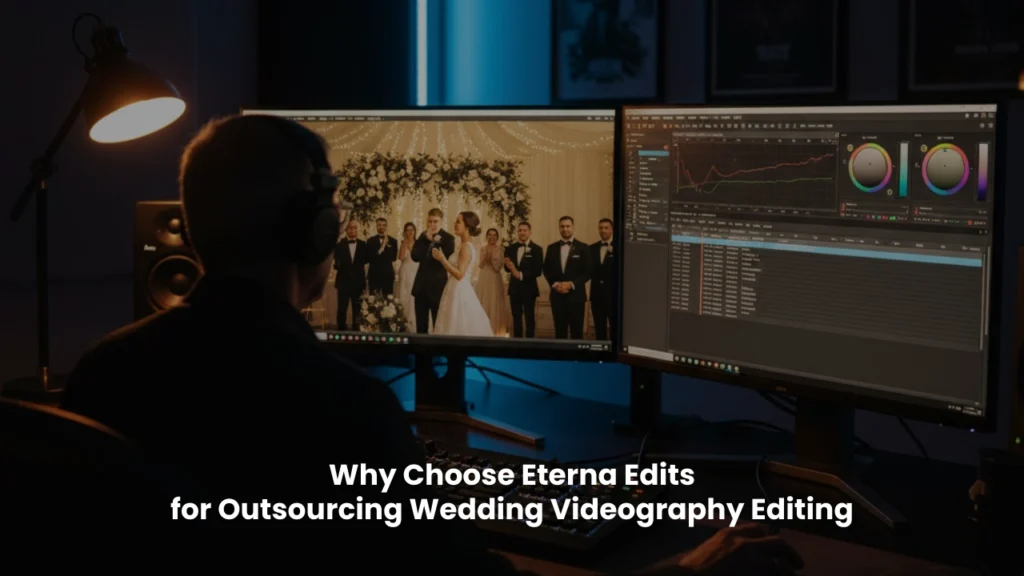
Outsourcing wedding videography editing has become essential for studios and solo videographers who want to save time without compromising quality. Eterna Edits specializes in professional wedding video editing services designed specifically for wedding filmmakers who value storytelling, consistency, and fast turnaround.
1. Wedding Films That Match Your Style
At Eterna Edits, we don’t use generic templates. Every wedding film is edited to match your unique shooting style—cinematic, documentary, emotional, or modern. From music selection to color grading and pacing, we ensure your brand identity stays intact.
2. Save Time & Edit More Weddings
Wedding video editing can take 30–60 hours per project. By outsourcing to Eterna Edits, you reclaim that time to:
- Book more weddings
- Focus on filming and client relationships
- Scale your business without burnout
We handle the wedding video post-production work so you can grow faster.
3. Expert Handling of Wedding Video Songs & Audio
From syncing vows to selecting emotional wedding video songs, our editors understand how audio drives storytelling. Clean dialogue, smooth transitions, and perfect music timing are our editing strengths.
4. Consistent Quality, Even During Peak Season
Peak wedding season can overwhelm in-house teams. Eterna Edits delivers consistent, high-quality edits—even with bulk projects—without delays or quality drops.
5. Fast Turnaround with Reliable Support
We know delivery time matters. Our streamlined workflow ensures:
- Quick turnaround times
- Clear communication
- Dedicated project support
Your clients stay happy, and your reputation stays strong.
6. Trusted Wedding Video Editing Outsourcing Partner
Whether you’re a solo wedding videographer or a growing studio, Eterna Edits works as an extension of your team—not just an outsourcing service.
Frequently Asked Questions
What questions should a wedding videographer ask before the wedding?
A wedding videographer should ask about the couple’s preferred video style, important moments, wedding timeline, venue rules, vows, speeches, music choices, and final video expectations to ensure smooth filming and editing.
Why is it important to ask couples questions before the wedding day?
Asking questions before the wedding helps videographers avoid confusion, plan shots better, capture emotional moments, and deliver a wedding film that matches the couple’s vision.
When should a wedding videographer send a questionnaire to couples?
A wedding videographer should send the questionnaire 2–3 weeks before the wedding day, once the timeline and venues are finalized.
What should be included in a wedding videography questionnaire?
A wedding videography questionnaire should include questions about style preferences, key family members, special traditions, vows, speeches, music taste, venue restrictions, and delivery expectations.
How do questions help improve a wedding video?
Pre-wedding questions help videographers understand emotional priorities, plan audio and lighting, and tell a better story—resulting in a more personal and meaningful wedding film.
Should videographers ask about wedding video songs in advance?
Yes. Asking about wedding video songs ensures the music matches the couple’s personality and emotional tone, making the final film more engaging and memorable.
Why should videographers ask about the wedding timeline?
The wedding timeline helps videographers plan coverage, manage travel between venues, and avoid missing important moments like vows, rituals, or surprises.
What questions should videographers ask about vows and speeches?
Videographers should ask if vows are personal or traditional, who will give speeches, whether microphones will be available, and if any special performances are planned.
How can asking questions reduce wedding-day stress?
Clear communication before the wedding eliminates last-minute decisions, prevents misunderstandings, and allows videographers to focus fully on capturing moments.
Should videographers ask about venue restrictions?
Yes. Many venues have filming, lighting, or drone restrictions. Asking early helps videographers prepare the right equipment and avoid issues on the wedding day.
How long should a wedding video be discussed with couples?
Videographers should ask couples how long they want their wedding video to be and whether they prefer highlights, full films, or social-media-friendly edits.
Who should be the main point of contact on the wedding day?
Videographers should ask for a coordinator, planner, or family member as the main contact to handle timing or location changes during the wedding.
Should videographers ask permission to share wedding videos online?
Yes. Always ask couples if their wedding video can be used for portfolio, website, or social media purposes to avoid legal or privacy issues.
What “must-not-miss” moments should videographers ask about?
Videographers should ask about surprise performances, emotional family moments, cultural rituals, or special guest interactions that are important to the couple.
Can asking the right questions improve client satisfaction?
Absolutely. Asking the right questions builds trust, shows professionalism, and results in a wedding film that exceeds client expectations.