
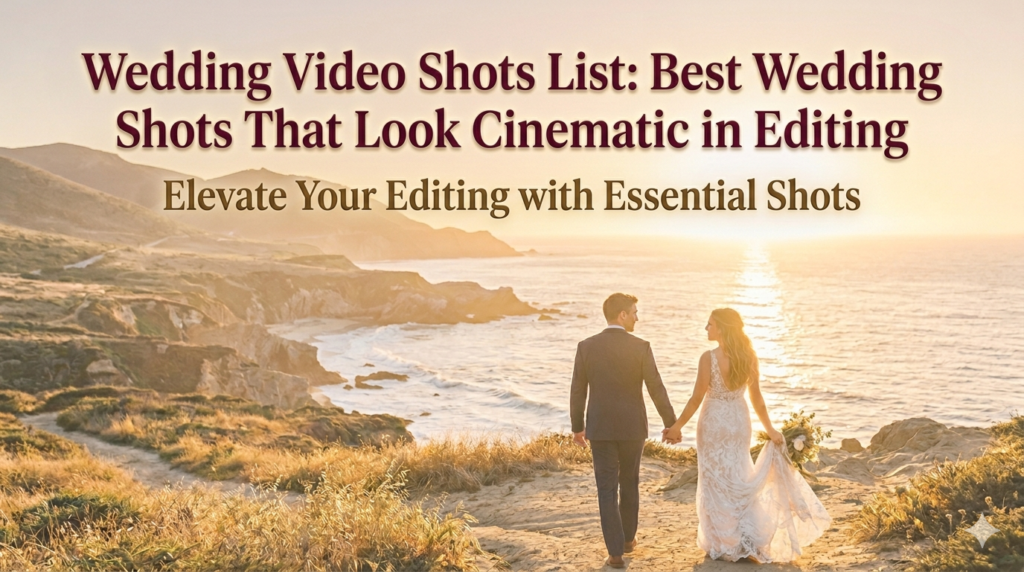
There’s a difference between a wedding video and a wedding film. One documents the day. The other makes people cry on their third rewatch, five years later.
That difference rarely comes down to the camera body you’re using. It comes down to what you shoot and how those shots are handled in post. A well-planned wedding video shot list gives your editor something real to work with. And when the footage is good, the editing can be genuinely transformative.
This guide breaks down the shots that actually matter, the ones that cut well, hold emotion, and give a wedding film its cinematic feel. Whether you’re a seasoned wedding videographer or still dialling in your workflow, this list is worth revisiting before every event.
What Makes a Wedding Shot Look Cinematic?
Not every shot earns its place in the final edit. Cinematic footage tends to share a few common traits.
Movement is one of the biggest. A slow push-in, a subtle arc around the couple, or a smooth slider pull instantly reads as intentional and polished. Static shots have their place, but movement adds dimension.
Lighting is just as critical. Backlighting and video light wedding shots, especially with window light, golden hour sun, or rim lighting behind the subject, create depth and separation that flat, frontal light just can’t replicate. Editors can enhance these in color grading, but they can’t manufacture them from nothing.
Composition matters too. Leading lines, natural frames, and negative space give editors something to work with during cuts and transitions.
Then there is slow motion, genuine emotional reactions, and unguarded natural moments. These are the clips that end up in the highlight reel every single time. You can’t fake a grandmother wiping her eyes or the groom’s voice breaking during his vows. When you catch those moments, they anchor the whole film.
Getting Ready Shots That Add Emotion
The getting-ready portion of the day is underrated. It’s chaotic, it’s intimate, and it’s full of the kind of raw emotion that sets the tone for everything that follows.
Bride and Groom Detail Shots
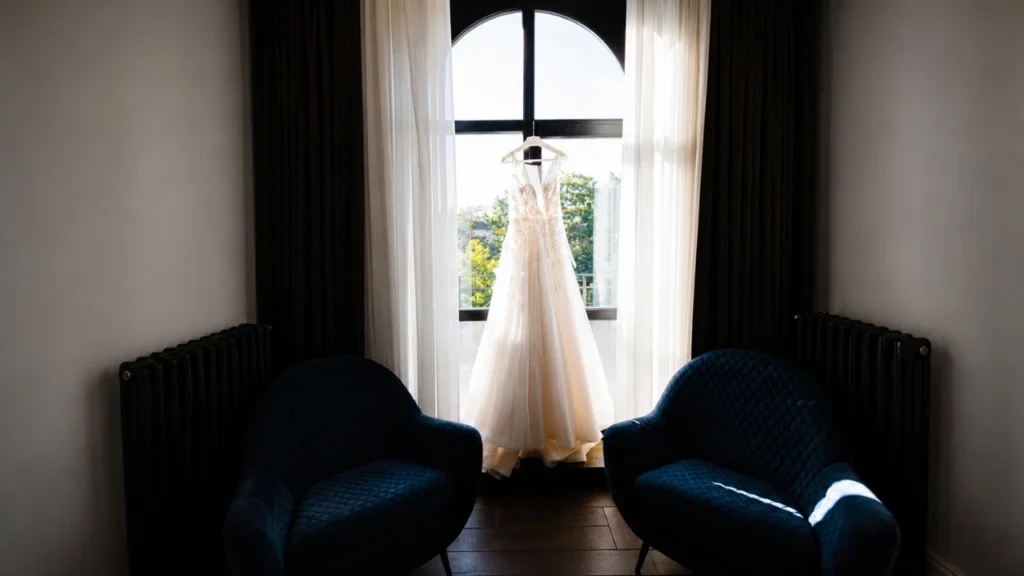
Rings, shoes, cufflinks, and the dress by the window detail shots function as breathing room between bigger emotional moments. They also give editors natural cut points for music transitions. Shoot them close, vary your angles, and use available window light where possible.
For the bride shot on wedding day video, focus on small, unposed moments: hands being steadied while earrings go in, a quiet look in the mirror before the ceremony begins. These are the clips that tend to hit hardest during the final film reveal.
Candid Reactions with Family and Friends
Don’t only point your camera at the principal subjects. The maid of honor sees the bride in her dress, and the best man laughs while fixing the tie. These reaction shots are some of the best wedding video shots you can capture all day. They’re human, real, and give editors something emotionally layered to cut between.
Mirror and Window-Light Shots
If there’s a good mirror in the room, use it. A well-composed mirror shot of the bride in the foreground, with the bridesmaids reflected behind her beautifully. Soft, directional window light creates instant cinematic contrast without any setup. These are the kinds of wedding video shots that look expensive and take almost no extra time to capture.
Ceremony Shots Every Wedding Videographer Should Capture
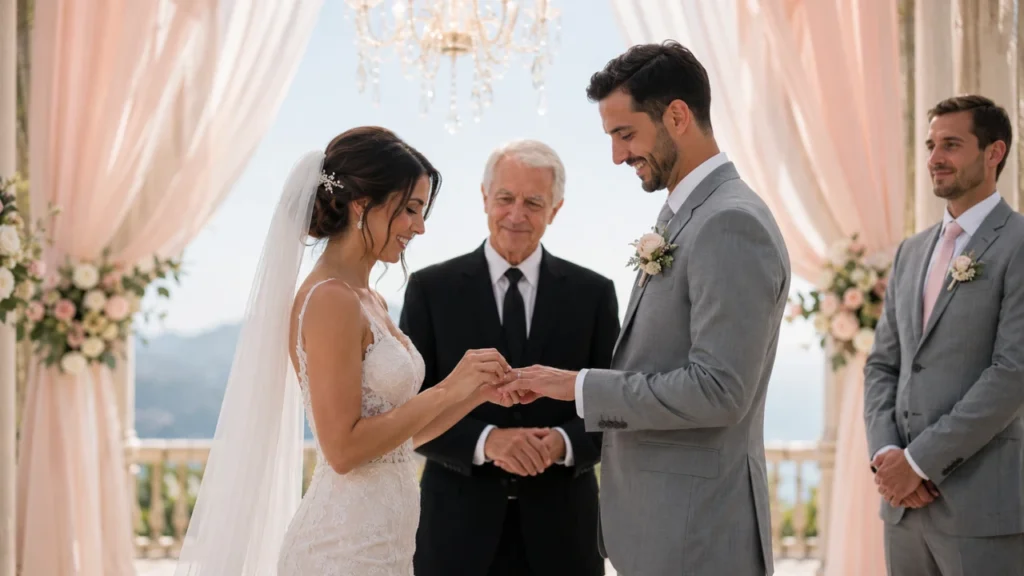
Your wedding video shot list should treat the ceremony as the highest-priority block of the day. The ceremony is the heart of the day, and it’s also the most uncontrollable part. You get one take on everything.
Walking Down the Aisle
Capture this from at least two angles: a wide shot of the full aisle, and a closer shot of the face. If possible, get the groom’s reaction simultaneously. In editing, cutting between the walk and the reaction creates an emotional sequence that needs very little else around it.
Vows and Reaction Shots
Clean audio on the vows is non-negotiable. But visually, the pauses, nervous smiles, and tears are irreplaceable footage. If you have a second shooter, keep them locked on the listening partner throughout. Those reaction shots, especially in slow motion, are consistently the most powerful clips in any finished wedding film.
Wide Venue and Guest Shots
Pull back occasionally. A sweeping wide shot of the venue gives the film scale and context. Guest reaction shots during the ceremony add warmth and texture. These are essential shots for wedding video storytelling that a lot of videographers overlook when they’re focused on the couple.
Best Cinematic Couple Shots for Wedding Films
This section matters more than most videographers realize. These are the shots that define the visual identity of your film.
Walking Shots
Simple but effective. The couple walking toward the camera, away from the camera, or across the frame gives editors natural motion to work with. A slow-motion walking shot synced to a music swell is a staple of cinematic wedding films for good reason.
Vary the speed, the distance, and the direction. Shoot at different focal lengths. A compressed 200mm walking shot looks completely different from a 35mm version, and both have their place.
Golden Hour Portraits
If you have even fifteen minutes with the couple at golden hour, protect that time aggressively. The warm, low, directional light does things that no artificial setup can replicate.
Backlighting and video light wedding shots captured during golden hour, where the sun acts as a natural rim light behind the couple, consistently produce the most shared, most commented-on clips in any wedding film.
Shoot wide for scale, tight for intimacy, and don’t forget to capture some slow motion while the light is right.
Foreground and Framing Shots
These are the shots that make videographers stand out. Using leaves, fabric, doorframes, archways, or other environmental elements to frame the couple in the background creates depth and visual interest that cuts beautifully.
Even slightly out-of-focus foreground elements add a layer of production quality that’s hard to achieve any other way. These are genuinely cool wedding video shots that don’t require expensive gear, just a good eye.
Motion-Based Shots for Transitions
Think about editing while you’re shooting. Shots that start or end with movement, a pan that leads into darkness, a tilt that begins with the sky, give editors transition points that feel organic.
A whip pan, a rack focus pull, or a slow push through a doorway can become the invisible glue between scenes in the final cut. These creative wedding video shots are often the difference between a film that flows naturally and one that feels cut together.
Reception Shots That Make Wedding Films Feel Alive
The reception is louder, less controlled, and honestly more fun to shoot. It’s also where a lot of videographers switch to autopilot. Don’t.
First Dance
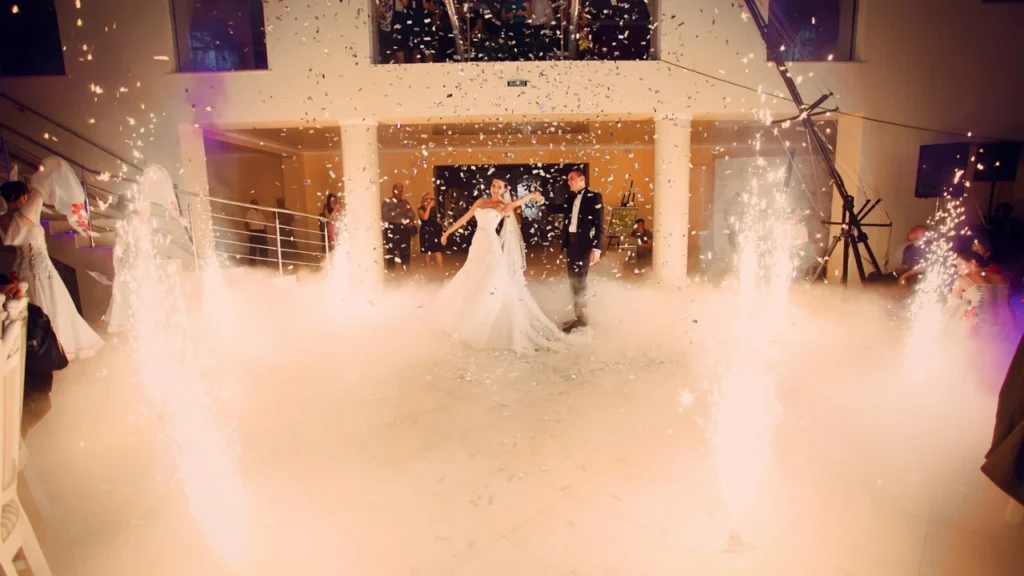
Shoot the first dance from multiple distances and angles. The wide shot captures the moment in context. The close-up captures the details: hands interlaced, a whisper, a laugh. A slow-motion close-up of their faces, synced to the music in post, is one of the most emotionally effective shots in any wedding video.
The dance shot at the wedding video is also a great place to experiment with backlight positioning yourself so the reception lighting creates a rim or halo effect behind the couple, which can produce stunning results.
Speech Reactions
Point a camera at the crowd during speeches, not just the speaker. The parents laughing, the bride covering her mouth, the best man getting emotional, those are the shots that make a speech sequence feel alive. Reaction footage is what takes a talking-head clip and turns it into a scene.
Dance Floor Moments
Don’t skip the dance floor just because it’s chaotic. Get in there. Low angles, slow motion bursts, candid group moments, the energy of a full dance floor cuts well with a driving beat and gives the film a joyful, alive quality in the back half.
These are some of the most essential shots for wedding video content, even if they’re harder to control.
Sparkler or Exit Shots
The exit is your last chance at a cinematic moment, and it’s often the most visually dramatic shot of the night. Sparkler tunnels, confetti exits, vintage car departures, plan your position and shoot at a slower shutter for light trails if conditions allow.
A beautifully shot exit gives editors a natural, triumphant ending to the film.
How Wedding Video Editing Makes These Shots Cinematic
Good footage gives editors room to work. Great footage gives them room to tell a story.
Color grading is where the visual mood of a film is set. Warm, creamy tones for a romantic feel. Cooler, more cinematic looks for editorial-style films. Professional color grading services applied consistently across the film, rather than clip-by-clip, are what separate a polished wedding film from amateur footage.
Proper color correction services also ensure that footage from multiple cameras, shot in different lighting conditions, actually matches in the final cut.
Music sync is an art form in itself. Cutting on beat, building through a chorus, letting a quiet moment breathe before the drop, these decisions are what give a film emotional momentum. This is where a skilled editor earns their keep.
Slow motion, applied at the right moments, extends time. A three-second real-time kiss becomes an eight-second slow-motion anchor for an entire sequence. But it only works if the original footage is clean and well-exposed.
Audio layering, blending ambient sound, ceremony audio, speech clips, and music adds depth that purely visual edits lack. Hearing the officiant’s voice fade under the music, or a laugh cut naturally before the track picks up, makes the film feel like something experienced, not just watched.
Story pacing is the invisible hand that holds everything together. This is what professional wedding video editing services get right: knowing when to slow down, when to cut fast, and when to let a moment just exist without interruption.
Teams like Eterna Edits specialize in exactly this kind of post-production work for wedding videographers across the USA. From full cinematic highlight edits to pre-wedding video editing, the goal is always the same: take what you shot and make it feel like a film worth watching over and over.
Videographers who outsource wedding video editing to a dedicated post-production team often find they can take on more projects, deliver faster, and produce more consistent results without burning out.
Final Thoughts
A strong wedding video shot list is built before you arrive and refined every time you shoot.
A strong wedding film is built in two places: on location and in post. Neither one can fully compensate for the other. If you shoot with intention using this video shot list for wedding coverage as your foundation, you give your editor the raw material they need to create something genuinely moving.
The shots that look cinematic in editing aren’t always the most technically complex. They’re the ones that capture real moments, real light, and real emotion. The rest is craft, and that’s what post-production is for.
If you’re a wedding videographer looking to deliver better films without carrying the full editing workload yourself, it’s worth exploring what a dedicated post-production partner can do.
Whether you need help with a single project or want to outsource video editing services at scale, Eterna Edits can make a real difference in what you’re able to deliver.
Your job is to capture the day. Let someone else make it cinematic.
Frequently Asked Questions
1. What should be on a wedding video shot list?
Cover four key areas: getting-ready details and candids, ceremony moments (processional, vows, reactions, recessional), couple portraits/golden-hour shots, and reception highlights (first dance, speeches, exit). Prioritise emotional, story-driven moments over posed setups. Think of your wedding video shot list as a flexible guide, not a rigid script.
2. How many cameras do you need to capture all these shots?
Two cameras are standard: one for wide coverage and one for close/reactive shots. A third or GoPro helps for extra angles, but a focused two-camera approach usually outperforms a passive multi-camera setup.
3. Which wedding shots look best in slow motion?
Best slow-motion subjects: first kiss, walking down the aisle, first dance, detail shots (veil, confetti, sparklers), and genuine emotional reactions. Use slow motion to emphasize real emotion and movement, not to hide poor composition.
4. How does color grading affect wedding footage?
Color grading sets the mood and ensures consistency across cameras and lighting conditions. It can elevate footage dramatically, but won’t fix underexposed, noisy, or badly composed clips.
5. Should wedding videographers outsource their editing?
Many do so to speed up turnaround, maintain quality, and handle busy seasons. If editing eats into shooting time or delays deliveries, outsourcing to specialists is usually worth it.
6. What's the difference between a wedding highlight film and a full documentary edit?
Highlight film: 4–8 minutes, music-driven, emotional arc for sharing. Documentary edit: 30–90 minutes, includes full ceremony audio and speeches for archival viewing. Couples often want both.